

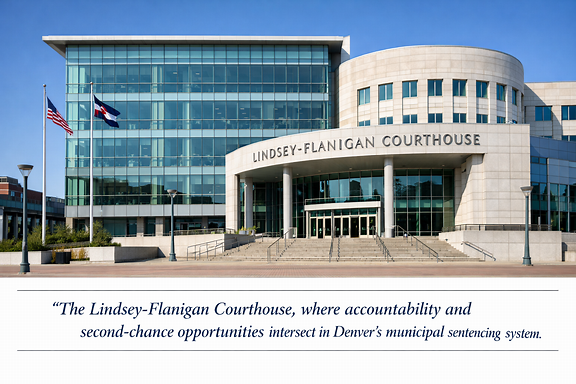
Denver’s Proposed Municipal Sentencing Reforms: Where Things Stand and How We Got Here
Denver is in the middle of a major debate over how the city handles low‑level offenses in municipal court. The discussion has accelerated in recent months, driven by a Colorado Supreme Court ruling and a proposal from several Denver City Council members to overhaul the city’s sentencing structure.
This article summarizes the latest developments and provides a brief history to help members understand what is changing and why it matters.
Why This Issue Emerged: The Supreme Court Ruling
In December 2025, the Colorado Supreme Court ruled that cities cannot impose harsher sentences for an offense than what state law allows for the same conduct. This ruling directly affected Denver, where municipal penalties for some low‑level offenses were significantly higher than state limits.
Denverite
Before the ruling, someone charged in Denver’s municipal court could face up to 300 days in jail for offenses that would carry 10 days or less under state law – such as petty theft or trespassing.
Denver Gazette
This discrepancy prompted calls for reform and set the stage for the current proposal.
What the Current Proposal Would Do
In March 2026, Councilmembers Sarah Parady, Serena Gonzales‑Gutierrez, and Shontel Lewis (“Sponsors”) introduced legislation to bring Denver’s municipal code into compliance with state law.
The first draft drew sharp criticism from many city leaders including fellow city council members, DPD, DFD, CDPHE, the Mayor’s office, Downtown Denver Partnership, downtown businesses, and victims of domestic violence and the groups that support them. The Sponsors have made several changes to the proposed Bill and have presented six iterations to the City Council Health and Safety Committee.
Their proposal would:
- Align all municipal sentences with state sentencing limits
- Cap low‑level municipal offenses at the state petty‑offense level
- Create five tiers of municipal offenses that mirror state classifications
Supporters argue the bill would end the “criminalization of poverty,” noting that about 75% of people charged in Denver municipal court live at or below the federal poverty line. They also point out that long municipal sentences can pressure defendants into plea deals.
Opponents – including some city prosecutors – say the proposal goes beyond what the Supreme Court requires, reducing penalties for certain offenses more than necessary. For example, trespass to a dwelling would become a petty offense locally, even though it is a Class 1 misdemeanor under state law.
Where the Proposal Stands Now
The first draft drew sharp criticism from many city leaders including fellow city council members, DPD, DFD, CDPHE, the Mayor’s office, Downtown Denver Partnership, downtown businesses, and victims of domestic violence and the groups that support them. The Sponsors have made several changes to the proposed Bill and have presented six iterations to the City Council Health and Safety Committee.
The proposal has moved out of committee and is headed for additional City Council readings. If approved, a final version could reach Mayor Mike Johnston’s desk as early as June.
FOX31 Denver
The debate has also created political tension. Axios reports that the reform effort – led by the council’s progressive bloc – may set up a significant policy clash with the Mayor’s office.
Axios
Why This Matters for Denver Residents
If passed, the reform would reshape how Denver handles low‑level offenses, shifting many cases toward shorter sentences and potentially increasing the number of cases handled in state court rather than municipal court. Supporters say this ensures fairness and consistency; critics worry it may weaken the city’s ability to address certain public‑order issues.
As board members, we are concerned about how reduced sentencing could affect domestic‑violence cases and the city’s ability to hold repeat shoplifters accountable – issues that directly impact residents and retailers in our neighborhood.
We are also aware that some municipal laws, although never used, are outdated or overly punitive and should be rewritten. Our position has been consistent: Denver must comply with the State Supreme Court ruling, but the city should then review each municipal law individually. Outdated or unreasonable provisions should be modernized, while laws that protect public safety and neighborhood stability must remain effective.
What’s clear is that the outcome will have long‑lasting effects on public safety policy, court operations, and how Denver balances accountability with proportionality in its justice.
We will provide more information as this moves to City Council in June.
Photo attribution: City and County of Denver