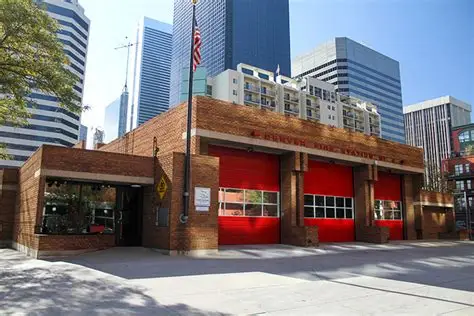

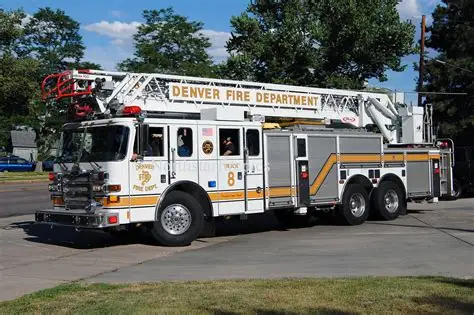
The Denver Fire Department (DFD) is one of the busiest and most versatile emergency‑response agencies in the United States. While most people associate firefighters with flames and smoke, Chief Desmond Fulton’s recent presentation at the Community Advisory meeting made clear that the modern fire service is far broader and far busier than most residents realize.
DFD responds to over 120,000 calls per year, and the vast majority are medical emergencies, not fires. In fact, fires account for only 2–3% of total call volume, while medical calls make up about 75%.
This workload reflects a national trend: fire departments have become all‑hazards emergency agencies, handling everything from cardiac arrests to elevator rescues, hazardous materials, vehicle accidents, and technical operations.
A Department That Rarely Sleeps
DFD’s 2020 annual report shows the scale of their work:
- Total calls: 111,000+
- Medical emergencies: 82,967 (74.6%)
- Total fires: 2,750 (2.5%)
Even in 2019 — a more typical pre‑pandemic year — the pattern was the same:
- Total calls: 118,826
- Medical emergencies: 77,898 (65.6%)
- Total fires: 2,369 (2.0%)
Fires double in size every 3 minutes. So, the time it takes to arrive at the scene is critical. The fire department averages 5 minutes and 30 seconds from the time they receive the call to the time they arrive. Pretty amazing!
These numbers highlight a simple truth: Denver firefighters spend far more time saving lives than fighting fires but whatever the emergency they get there quick.
Elevator Rescues: A Daily Reality in Upper Downtown
Chief Fulton emphasized a statistic that hits close to home for UpDoNA residents: DFD performs multiple elevator rescues every day, often in our high‑rise district. With thousands of elevators citywide, many aging or poorly maintained, firefighters are frequently dispatched to free trapped occupants.
These rescues are typically quick but require a full crew, pulling resources away from other emergencies. In a vertical neighborhood like ours, elevator reliability directly affects public safety.
Lithium Batteries
During the presentation, I asked Chief Fulton specifically about the growing danger posed by lithium‑ion batteries – particularly those used in e‑bikes, scooters, and electric vehicles. He acknowledged that while Denver does not yet publish formal statistics on these incidents, lithium‑battery failures are an emerging concern for fire departments nationwide. These batteries can enter “thermal runaway” when damaged or improperly charged, creating fires that burn hotter, spread faster, and re‑ignite multiple times. In a dense, high‑rise neighborhood like Upper Downtown, even a small battery failure inside an apartment or storage area can quickly escalate into a major event. Chief Fulton emphasized that DFD is watching this trend closely, and residents should be aware of the risks associated with uncertified chargers, aftermarket batteries, and storing mobility devices indoors. Lithium batteries stored or charged in residents units pose a particular threat. They are incredibly hard to extinguish and due to the heat they produce can destroy concrete which is one reason these fires cause so much damage. Batteries charged in hallways that catch on fire can quickly block people’s ability to escape.
The Human Side: Firehouse Life
One detail from Chief Fulton’s talk surprised many attendees: firefighters personally split the cost of food at their stations. Meals are cooked communally, paid out of pocket, and serve as a cornerstone of firehouse culture — a way to maintain camaraderie during 24‑hour shifts and high‑stress calls.
It’s a reminder that behind the statistics are men and women living together, working together, and responding at all hours to keep Denver safe.
Why This Matters for Upper Downtown
Our neighborhood’s density, high‑rise buildings, and mix of residential and commercial spaces make us one of the highest‑demand zones for DFD services. Elevator rescues, medical calls, alarm activations, and technical responses are daily occurrences.
Understanding DFD’s workload helps residents appreciate:
- Why fire units are frequently seen in the neighborhood
- Why elevator maintenance and building compliance matter
- How staffing and resource allocation affect response times
- The importance of supporting DFD through policy and awareness
Closing Thought
Chief Fulton’s presentation underscored the extraordinary breadth of Denver’s fire service. In addition to their primary task, they are medical responders, technical rescuers, inspectors, educators, and problem‑solvers and they do it at a pace few cities match.
For Upper Downtown, their work is not just important – it is essential!
Gil Vondrasek Vice President Upper Downtown Neighborhood Associati